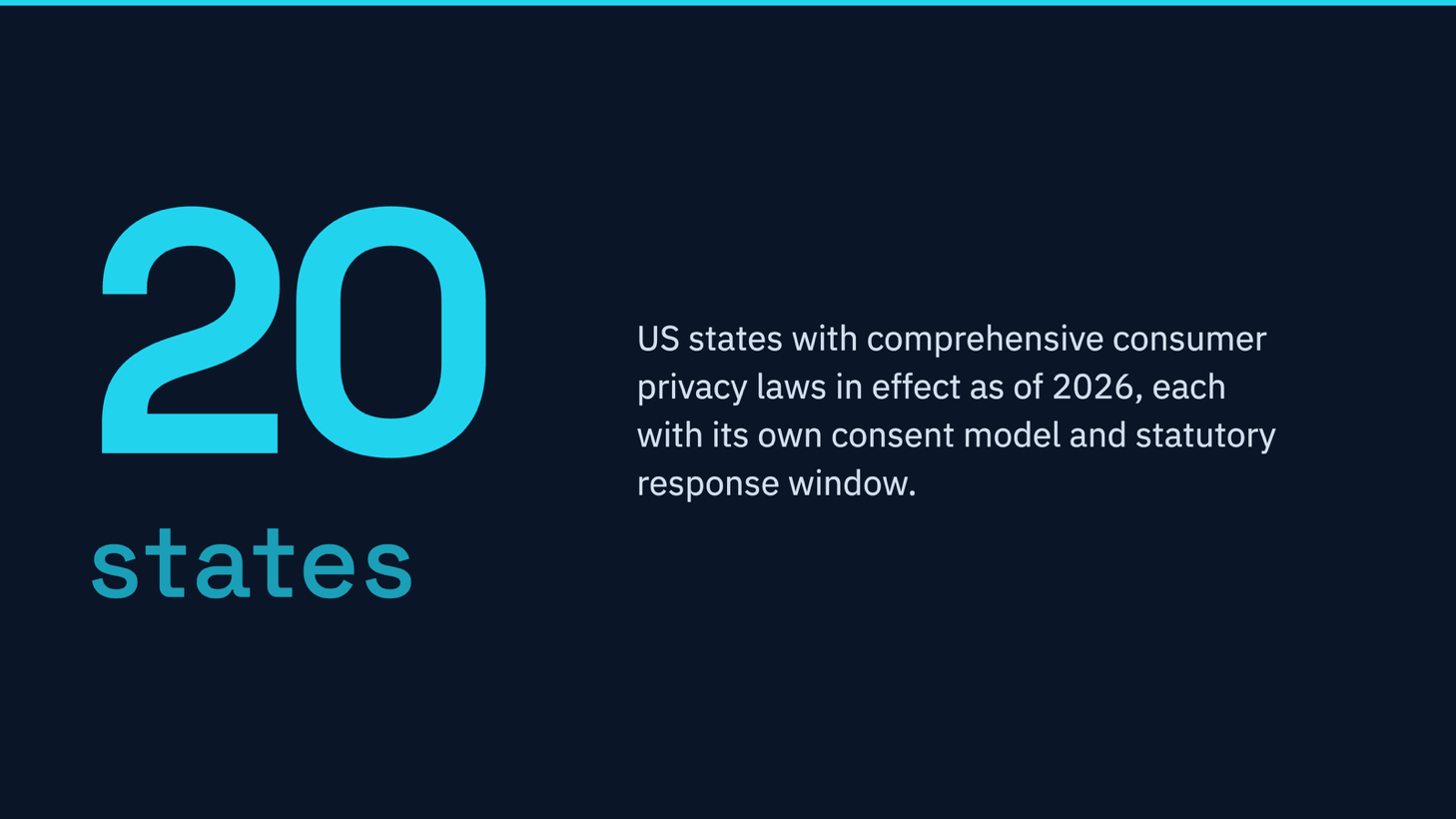
Twenty US states now have comprehensive consumer privacy laws in effect, each with its own consent model and its own 30 to 45 day window for responding to a data subject request.1 A privacy policy gets board sign-off once and is treated as finished. The same five findings tend to surface later, after the business has kept moving and the policy hasn't.
Five Findings That Surface After the Fact
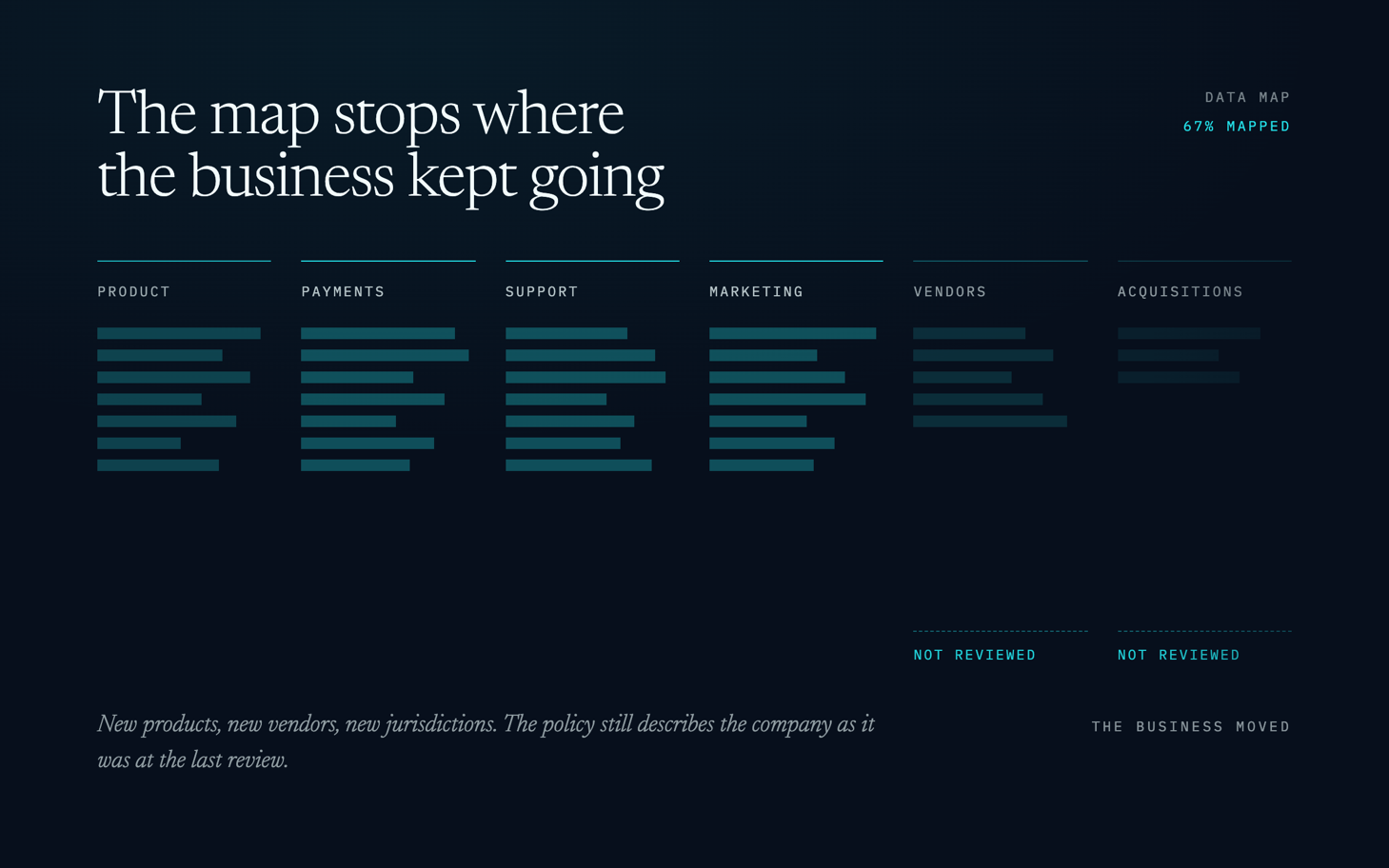
The Data Map Goes Stale Within Months
It gets built once, typically during a GDPR or CCPA readiness sprint, and stays accurate for maybe six months. New SaaS tools get procured, a data warehouse migration happens, and nobody updates the diagram showing where personal data actually lives.
New Vendors Start Moving Data Before Privacy Knows
Procurement signs a contract, data starts flowing that same week, and the privacy team finds out during the next audit cycle, if at all. Nobody checked whether the vendor's data handling practices fall inside the scope of the existing policy.
Retention Schedules Exist on Paper, Not in the Infrastructure
A schedule can specify an eighteen-month purge window in language precise enough to survive legal review, while the production database holds records going back years. A retention policy without an automated deletion job attached to it is a paragraph, not a control.
The Subject Access Request Process Has Never Actually Been Tested
Most organizations don't discover their process is broken until a real request lands, and by then they're improvising against a statutory clock instead of running a controlled test. A dry-run request costs nothing and reliably finds the worst operational gap before a regulator or a journalist does.
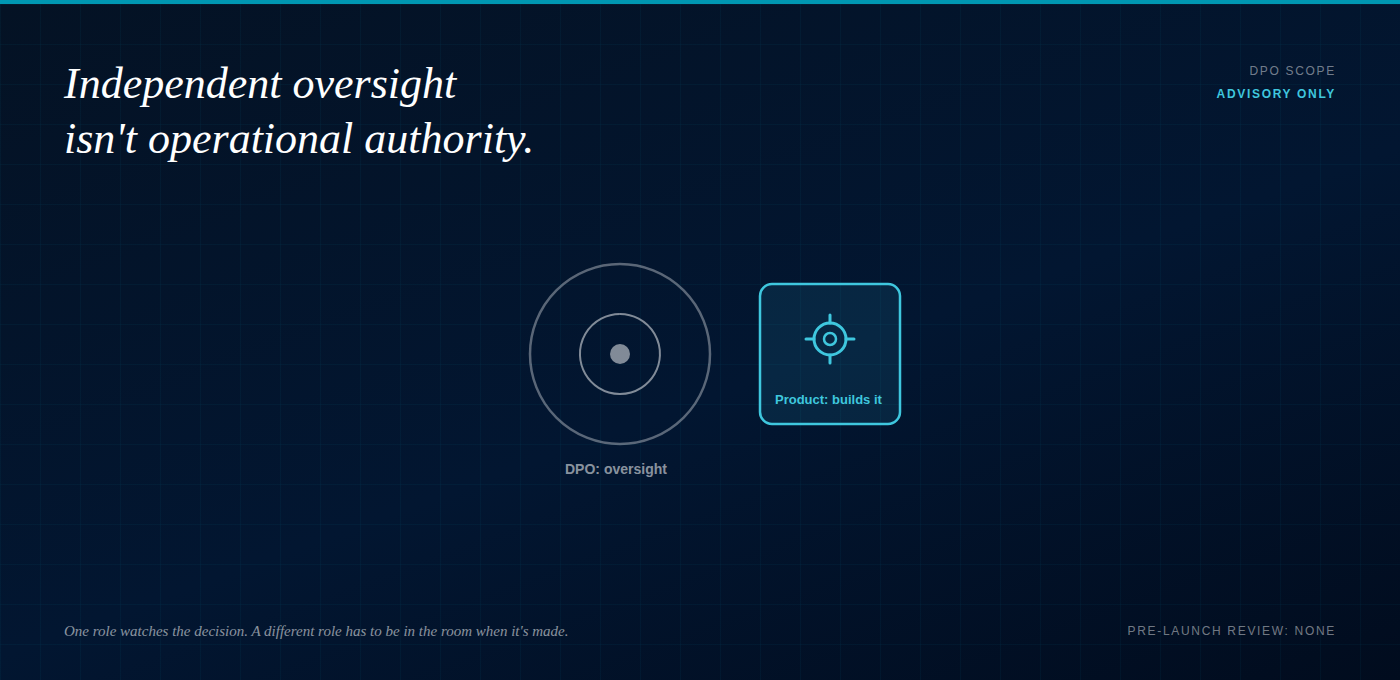
Products Ship Ahead of Privacy Review, Not Alongside It
“Privacy by design” is the phrase on the slide. In practice, the feature ships, gets adopted, and privacy finds out when a customer or a journalist asks an uncomfortable question about what data it's actually collecting.
Why These Five Keep Recurring
Cumulative GDPR fines have passed €7.1 billion since 2018, with roughly €1.2 billion issued in 2025 alone, and reported breach notifications across Europe reached an average of 443 per day, a 22% increase and the first time that average has exceeded 400 since GDPR took effect.2 New California regulations effective January 1, 2026 now require a documented privacy risk assessment for any processing activity that presents significant consumer risk,1 which means privacy obligations are expanding directly into the AI-driven processing most organizations assumed sat outside their existing program. Devensa AI's vCPO vOfficer is built to keep that specific gap covered, since it's exactly where new exposure keeps showing up first.
The Principles Underneath Every Regulation
Most privacy regulations worldwide, GDPR and the current wave of US state laws included, trace back to the same foundational principles: the Fair Information Practice Principles, or FIPPs.
- Notice: individuals are told what data is collected and why, in plain language.
- Choice and consent: individuals have a real, exercisable choice over how their data is used.
- Access and participation: individuals can see and correct the data an organization holds about them.
- Data integrity and security: data is accurate, current, and protected against unauthorized access.
- Accountability and enforcement: the organization can demonstrate these principles are operating, not just claim it.
Devensa AI's TruMaturity™ Assessment scores privacy governance against these principles on the CMMI scale from Initial through Optimized, and reassesses roughly annually as the data map, vendor list, and applicable regulations all continue to change.
Keeping the Snapshot Current
- Update the data map on the same trigger as vendor onboarding: not a fixed annual refresh that's already behind by the time it's finished.
- Run a dry-run subject access request twice a year: it costs nothing and finds the worst operational gap before a regulator or customer does.
- Attach automation to every retention deadline: a purge date written into a policy enforces nothing on its own.
- Review new vendors before data starts flowing, not after: procurement and privacy need to be in the same conversation, not sequential ones.
- Gate product releases on privacy review, not just security and legal: a feature that ships ahead of review gets its review during damage control instead.
Frequently asked questions
What's the difference between data privacy and data privacy governance?
Data privacy is the set of practices and protections around personal data: consent, encryption, deletion. Data privacy governance is the structure that keeps those practices consistent, documented, and current with what the organization has actually told regulators and customers, with a named owner accountable for the whole program.
Do I need to comply with privacy laws in every state where I have customers?
Generally yes, if you meet a given state's applicability thresholds and process the personal data of residents there, regardless of where your organization is headquartered.
How long do we have to respond to a data subject access request?
It depends on the law. Most US state privacy laws allow 45 days, sometimes extendable by another 45. GDPR generally requires a response within 30 days. Organizations operating across jurisdictions need a process built around the shortest applicable window.
Can a platform keep a privacy program current automatically?
It can keep the map, vendor list, and retention rules under continuous monitoring rather than annual refresh, which is where most programs actually go stale. Devensa AI's vCPO vOfficer tracks that drift and routes findings through human review before anything changes.
How do I know if my privacy program has a real gap right now?
Run a dry-run data subject access request today and time how long it takes and how many gaps it exposes. Most programs that look complete on paper reveal at least one operational gap the first time they're actually tested. When did you last run that test for real?
Keep Your Privacy Program Current, Not Just Compliant on Paper
Devensa AI's vCPO vOfficer keeps the data map, vendor list, and retention rules under continuous monitoring, scored against the FIPPs and the CMMI scale, instead of accurate only on the day the policy was signed.
If a real data subject access request landed this afternoon, how confident are you in what happens next?
Schedule a demo with our team at info@devensa.ai, or request early access to the Governance Readiness Assessment, coming to devensa.ai, if you'd rather start on your own.
Sources
- Clym, U.S. State Privacy Laws: The 2026 Comparison Guide. https://www.clym.io/blog/us-privacy-law-comparison-map
- DLA Piper, GDPR Fines and Data Breach Survey, January 2026. https://www.dlapiper.com/en/insights/publications/2026/01/dla-piper-gdpr-fines-and-data-breach-survey-january-2026