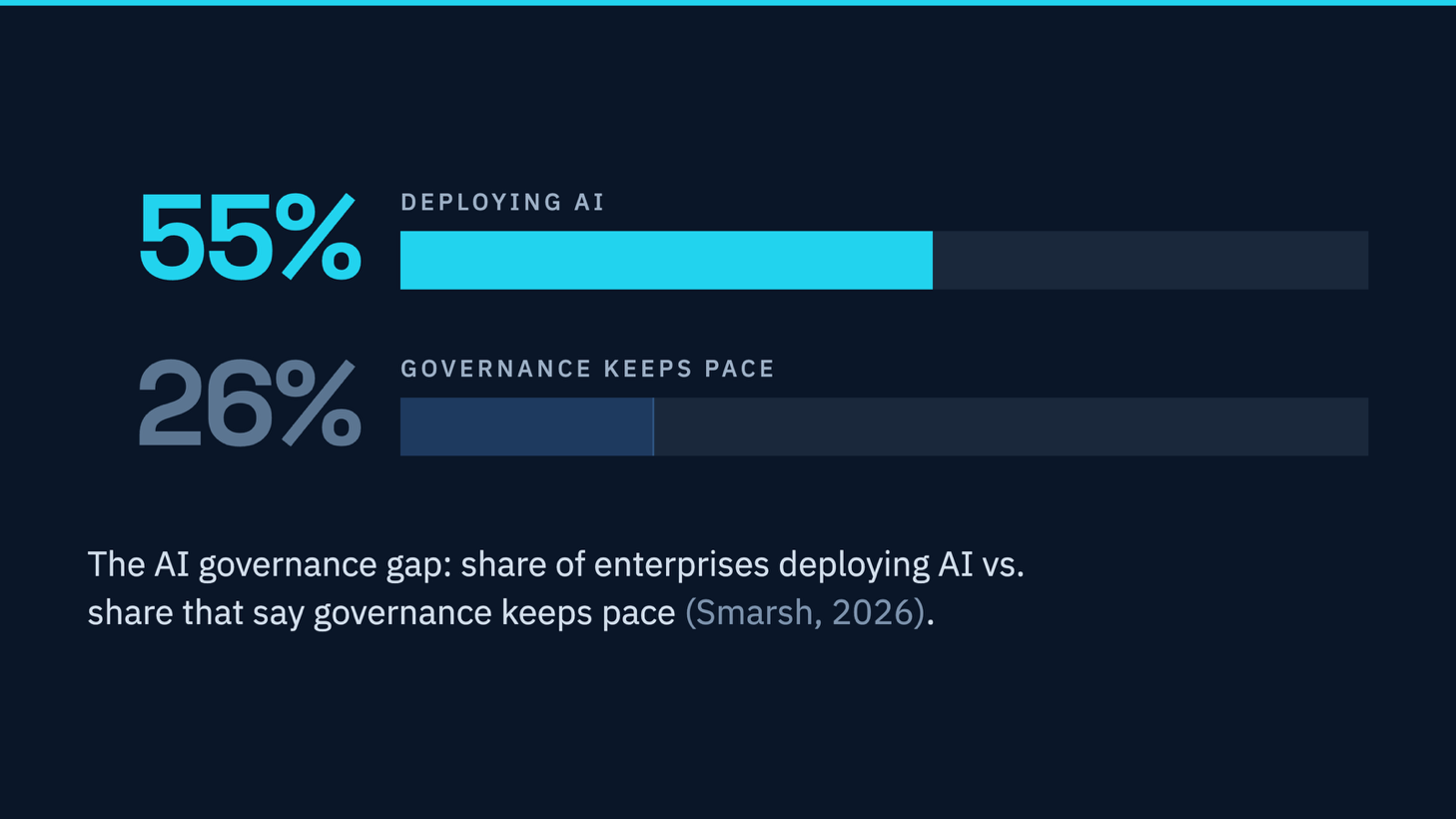
55% of enterprises are actively deploying AI in production, but only 26% say their governance framework is fully aligned with that pace, and just 30% say they can reliably detect the AI tools employees are already using without approval.1 Most organizations don't find out their AI deployment has no governance behind it until something goes wrong. The signs are usually visible well before that, if anyone's looking for them.
Five Signs the Governance Isn't There
There's No Real Model Inventory
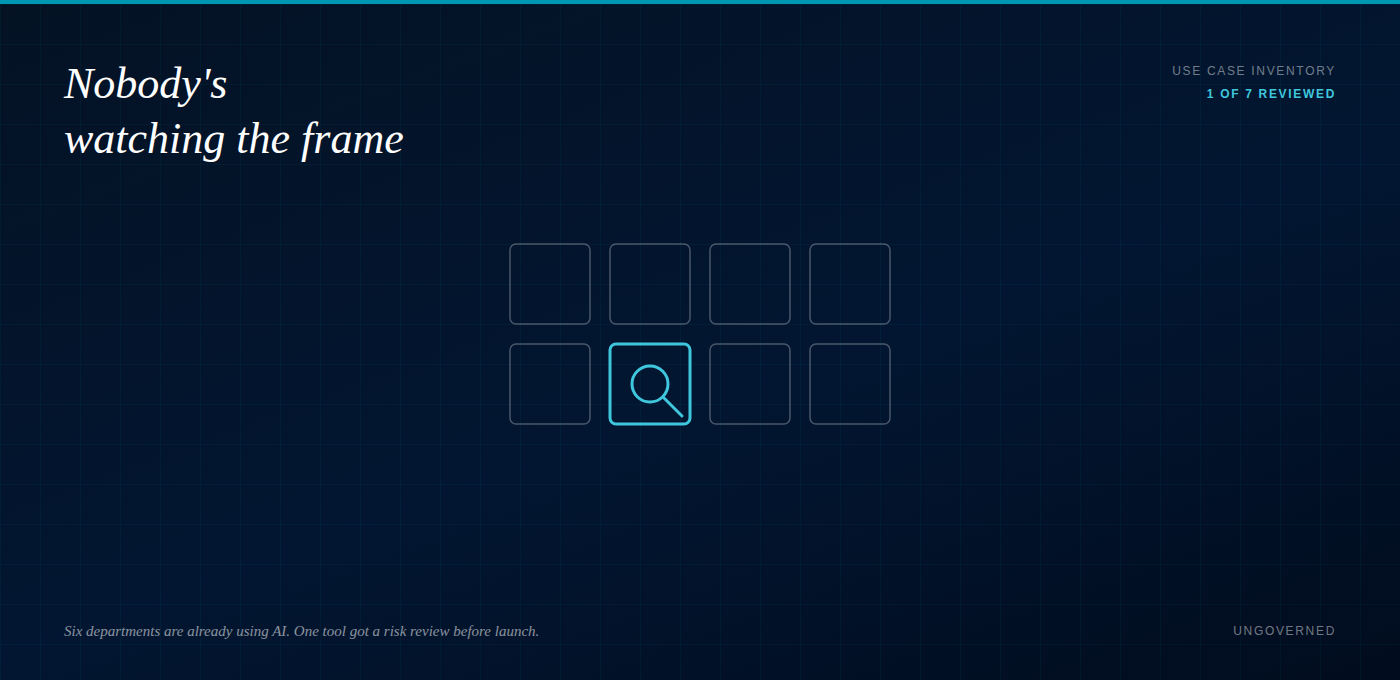
Ask for a complete list of every AI tool in use, including vendor features with a model quietly built in, and what comes back is usually a spreadsheet that's already out of date. Half the tools people are actually using never went through a process that would have logged them; someone found a tool, liked it, and it just stayed. The gap between the official inventory and what's actually running is almost always bigger than expected.
“Approved” Just Means Someone Watched a Demo
In most organizations, approval happens the moment a few people like a live demo, not after a review against the NIST AI Risk Management Framework or an impact assessment under the EU AI Act. A tool gets a Slack channel and a budget line the same week it's demoed, and nobody in that meeting had AI risk review anywhere in their job description.
Nobody Owns the Outcome When It's Wrong
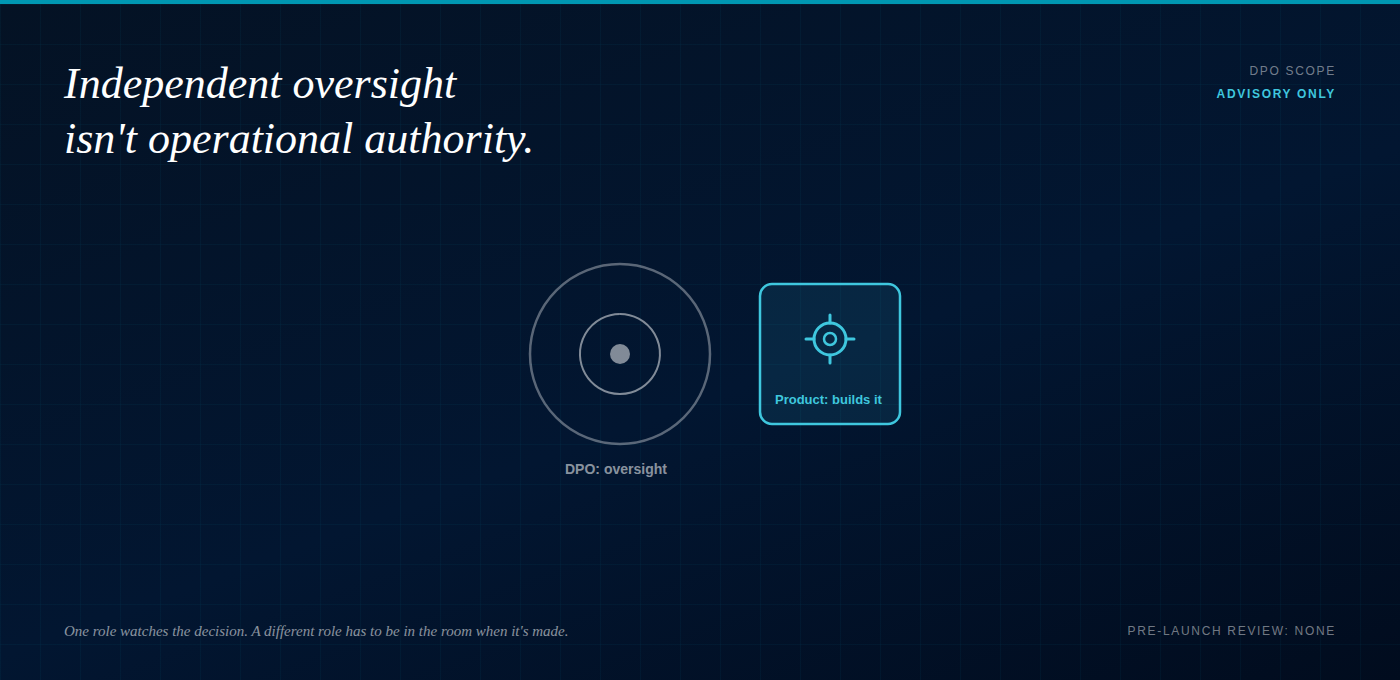
The risk with AI is rarely that a model is unpredictable. Every statistical model behaves in well-understood, bounded ways. The real risk is that no one is assigned to own the outcome when a model gets something wrong, whether that's a chatbot giving a customer bad information or a screening tool developing a bias nobody flagged. Ask who signs off when a specific tool fails, and the honest answer in most companies is a shrug.
The Paperwork Describes a Tool That No Longer Exists
Use-case documentation drifts faster than almost any other technical record. A tool gets approved for one narrow purpose, and six months later three teams are using it for something the original approval never covered. Nobody revisits the paperwork until an audit forces the question.
Governance Is “We Read the Vendor's Terms of Service”
The weakest version of AI governance treats a vendor's terms of service as a substitute for a real policy. That document exists to protect the vendor in a lawsuit, not to manage an organization's risk exposure, and very few security leaders have actually read the AI-specific clauses in their top vendor contracts.
Why This Costs More Than It Looks Like It Should
Shadow AI incidents nearly doubled to 43% of all AI-related security incidents in the past year, and when a breach involves shadow AI, it adds an average of $670,000 to the total cost.2 Spend on AI governance tooling is projected to grow from roughly $227 million in 2024 to nearly $4.83 billion by 2034,3 which is the market's way of saying the risk curve is outrunning most organizations' ability to track it manually. Devensa AI's vCAIO vOfficer exists to keep model inventory, approval, and ownership continuous instead of a once-a-year exercise.
How Governance Actually Tracks This
The NIST AI Risk Management Framework organizes the work into four functions, and they map directly onto what continuous oversight has to do.
- Govern: establish the policies, roles, and accountability structure before any model reaches production.
- Map: identify the context, intended use, and risk classification of each AI system, kept current as tools change.
- Measure: track risk, performance, and bias against defined criteria continuously, not once at launch.
- Manage: route identified risk to a named owner accountable for the response, with human review before action.
On first sign-in, Devensa AI's TruMaturity™ Assessment scores AI governance maturity against these four functions on the CMMI scale from Initial through Optimized, and reassesses roughly annually so the score reflects the organization's actual AI footprint, not the one it had at onboarding.
What to Put in Place This Quarter
- Run a real discovery pass, not a survey: ask every department what they're actually using. The gap between the official list and reality is usually bigger than expected.
- Attach a name, not a department, to every approval: a use case with no accountable owner has no governance, regardless of what the paperwork says.
- Align to NIST AI RMF from day one: it gives a defensible answer when a regulator, customer, or board member asks how AI risk is managed.
- Revisit approvals on a fixed cadence: AI use-case documentation drifts faster than almost any other technical record.
- Treat oversight as what lets adoption move faster: teams with a real approval gate stop re-litigating the same risk conversation for every new tool.
Frequently asked questions
What is shadow AI, exactly?
Shadow AI is any AI tool an employee uses without formal review or approval, from a vendor feature with a model quietly built into it to a personal account with a consumer AI tool. It matters because most organizations can't see the majority of their own AI footprint without a way to actively discover it.
What's the difference between AI governance and AI ethics?
AI ethics is the set of principles behind how AI should behave: fairness, transparency, harm avoidance. AI governance is the operational structure, inventory, approval process, ongoing monitoring, that puts those principles into practice and makes them auditable.
Which framework should an AI governance program be built on?
The NIST AI Risk Management Framework is the most widely referenced standard for US organizations. Organizations operating in or serving the EU also need to map to the EU AI Act's risk-tiered obligations.
Can an AI system govern itself?
No, and that's the point. Devensa AI's vCAIO vOfficer continuously monitors, classifies, and surfaces AI risk, but every recommendation it generates routes through a human approval gate before anything is published or acted on. Oversight of AI still requires a person in the loop.
How do I know if my organization has a shadow AI problem right now?
Ask for a complete AI tool inventory and time how long it takes to produce. Then ask a few people in different departments what AI tools they actually use day to day. If the two lists don't match, and they usually don't, that's the gap. Would your two lists match today?
Bring Shadow AI Into View
Devensa AI's vCAIO vOfficer continuously discovers AI use across the organization, maps it to NIST AI RMF and the EU AI Act, and keeps a named owner attached to every production use case.
If a regulator or a board member asked for your AI model inventory tomorrow, how long would it take to produce?
Schedule a demo with our team at info@devensa.ai, or request early access to the Governance Readiness Assessment, coming to devensa.ai, if you'd rather start on your own.
Sources
- Smarsh, 2026 Enterprise AI Trends Study, conducted with FTI Consulting, cited via MarketScale. https://www.marketscale.com/industries/software-and-technology/shadow-ai-is-outpacing-enterprise-governance-smarsh-study-finds
- IBM Security, Cost of a Data Breach Report 2026. https://www.ibm.com/reports/data-breach
- Knostic, AI Governance Tools: Top 10 Platforms Compared (2026), market sizing citation. https://www.knostic.ai/blog/ai-governance-platforms