Poor data quality costs the average organization $12.9 million a year, according to Gartner research.1 After a data quality incident, the post-mortem at most companies turns up the same discovery: three different departments each assumed another one owned the customer record. IT thought the business owned it because IT just stores what it's given. The business unit thought IT owned it because IT built the database. Data governance, if it existed at all, thought ownership was a policy question, not an operational one.
Nobody was lying. Everybody was reasonably wrong, because “owns the data” means something different depending on who you ask, and most companies never force an answer until something breaks.
Owner and Custodian Are Not the Same Job
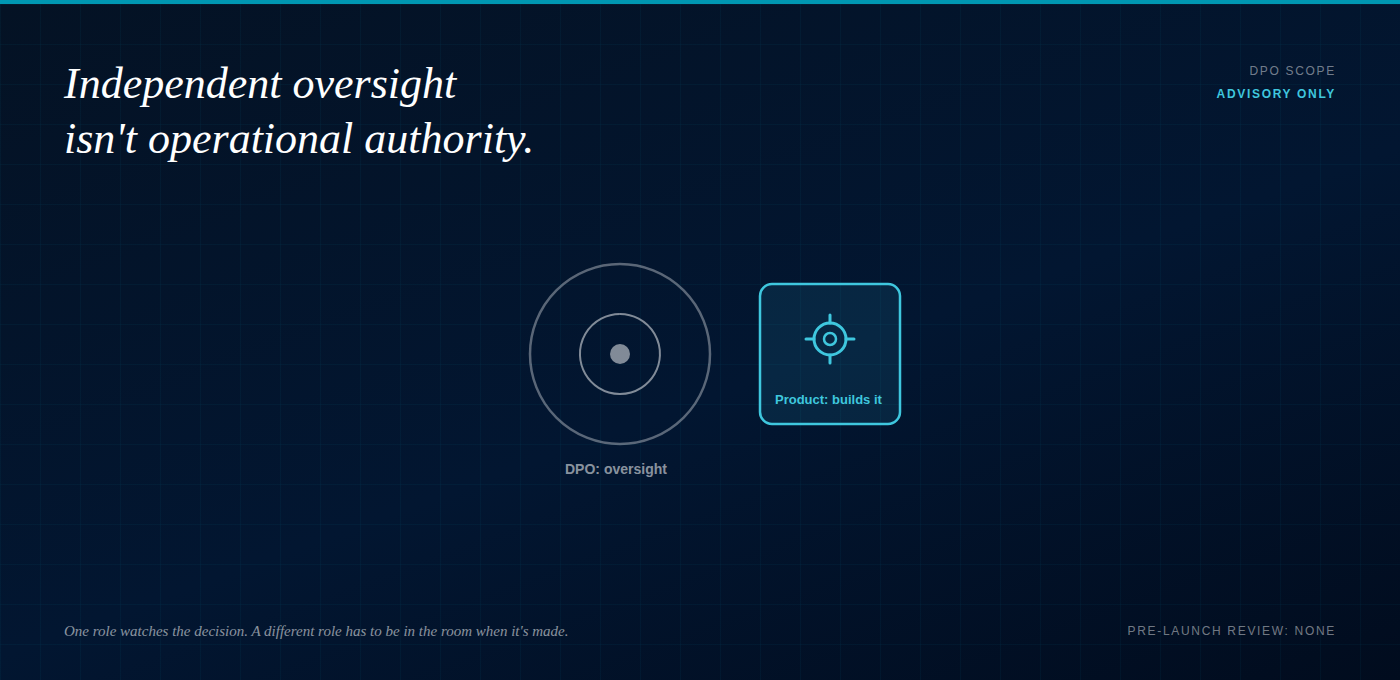
DAMA-DMBOK, the closest thing data governance has to a shared reference, draws a distinction worth stealing: a data owner is accountable for the quality and appropriate use of a specific data domain. A data steward or custodian actually manages it day to day. Confusing the two is where most governance programs go sideways. IT is almost always the custodian. It's rarely, and shouldn't be, the owner. The business unit that generates and depends on the data should be.
What Lineage Actually Reveals
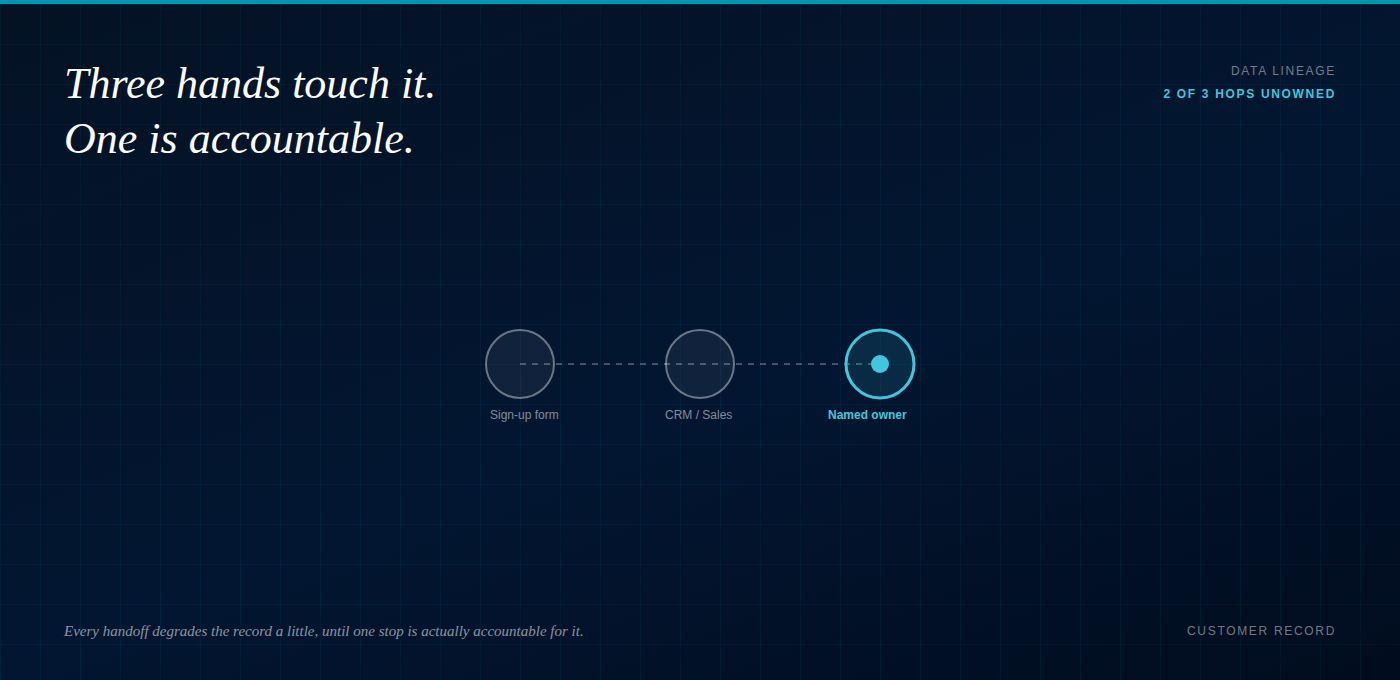
Data lineage makes the problem visible in a way policy documents don't. Trace a single customer record from the sign-up form through the CRM, the marketing platform, and the analytics warehouse, and count how many hands touch it without anyone being accountable for its accuracy at each hop. In most companies that number is uncomfortable. Data quality doesn't degrade at one point. It degrades a little at every handoff where nobody's specifically on the hook.
Ownership Needs Hours, Not Just a Title
My actual opinion here, since this gets talked around a lot: assigning data ownership by department is close to useless if the department head has no data literacy and no time carved out for the role. Ownership needs to come with actual hours in someone's week, not just a line in a RACI chart nobody opens after the workshop that produced it. Pick fewer domains, name real owners, give them the bandwidth, and you'll get further than a company-wide ownership matrix that looks complete and functions as decoration.
Frequently asked questions
Should IT ever be a data owner instead of a custodian?
Only for genuinely IT-generated data, like system logs. Anywhere the data describes the business, the business should own it.
How many data domains should one owner realistically manage?
One or two with real depth beats five with none. Breadth without bandwidth is how ownership becomes symbolic.
What's the first sign a data ownership program isn't working?
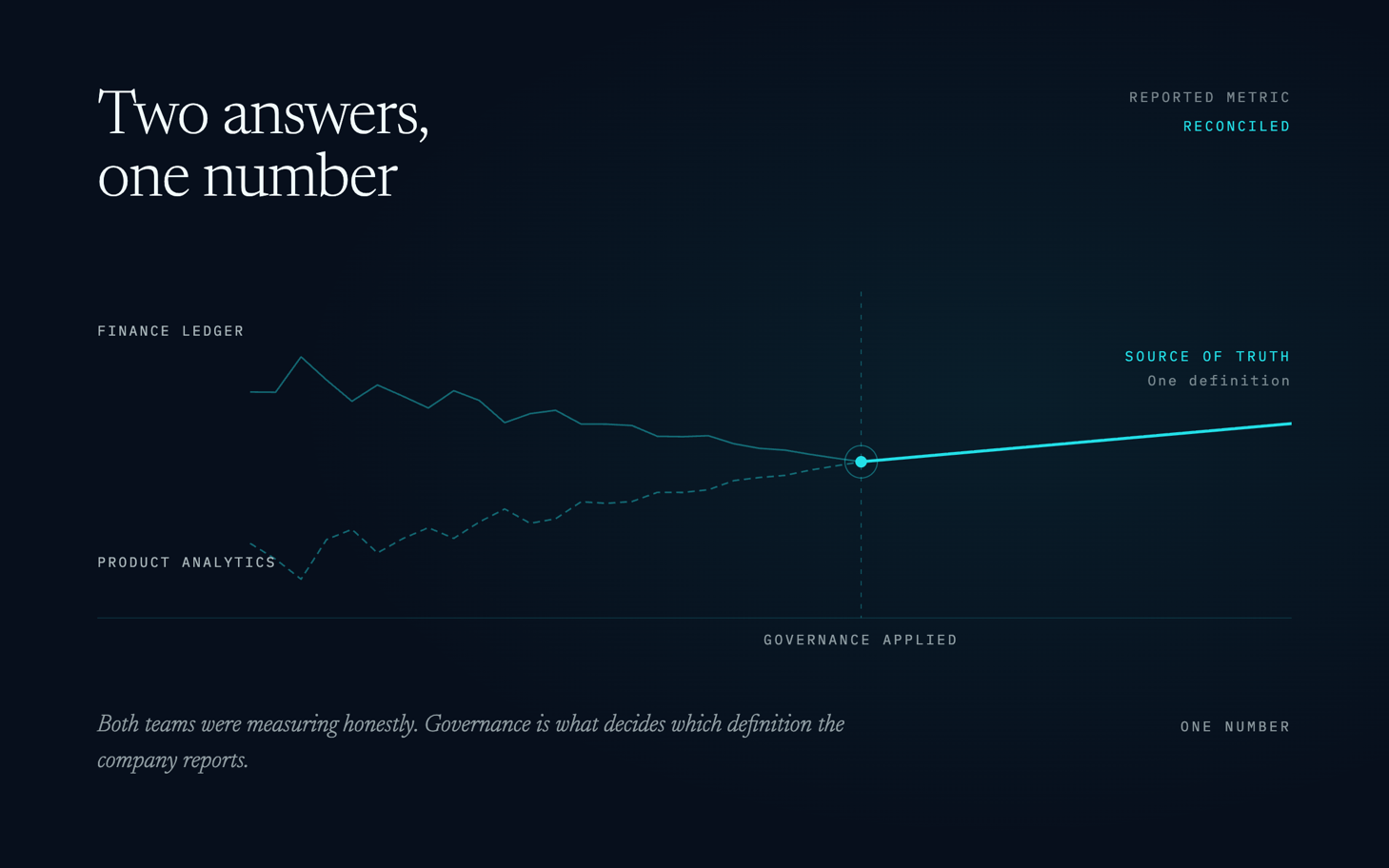
Two departments reporting different numbers for what should be the same metric, and neither one flagging it as a problem.
See Exactly Where Data Accountability Breaks Down
Devensa AI's vCDO vOfficer assigns and tracks data ownership by domain, with lineage visibility that shows exactly where accountability breaks down.
If finance and product reported different numbers for the same metric tomorrow, would you know why within the hour?
Schedule a demo with our team at info@devensa.ai, or request early access to the Governance Readiness Assessment, coming to devensa.ai.
Sources
- Gartner, 12 Actions Data and Analytics Leaders Can Take to Improve Data Quality, cited via Verato. https://verato.com/resources/gartner-dq