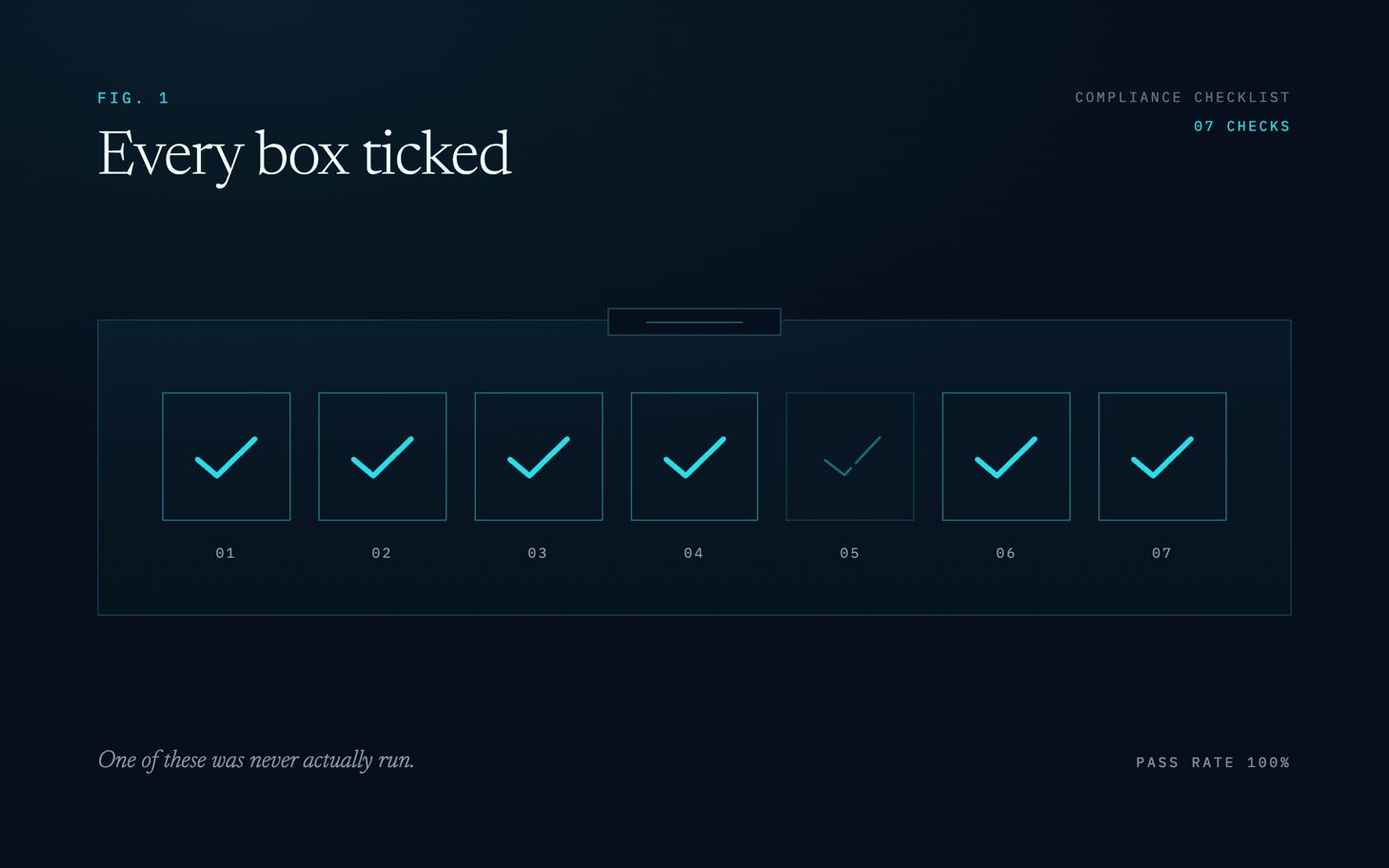
A control can pass a SOC 2 exam for three straight cycles and still fail the moment it's actually needed. Noncompliance adds close to $174,0001 to the average cost of a data breach, on top of any fine, and that number shows up whether or not a regulator ever gets involved. The same five controls keep passing review and failing in practice, and the pattern is the same every time: each one was built to satisfy a testing procedure, not to stop a bad outcome.
The Five Controls That Keep Failing the Same Way
Security Awareness Training
Completion sits at 100% because the learning platform won't let anyone log off without clicking through every slide. A phishing simulation three weeks after that “annual refresher” routinely tells a completely different story. The completion report and the simulation results almost never agree, and the simulation is the one worth trusting.
Access Certifications
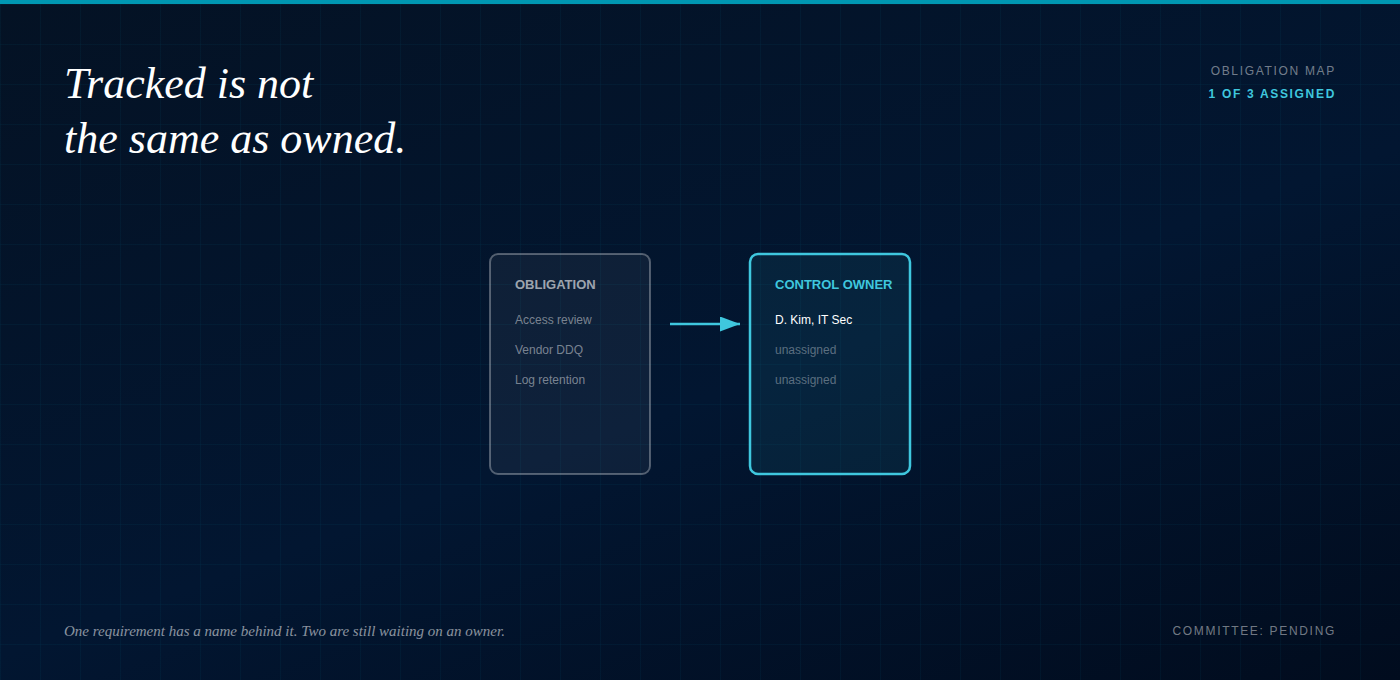
A manager gets a spreadsheet listing everyone with access to a system and signs off in under two minutes. The signature gets treated as evidence of review. It's evidence of a click, and four hundred rows do not get meaningfully reviewed in ninety seconds.
Vendor Risk Assessments
The questionnaire goes out before the contract is signed, comes back clean, and gets filed. Almost nobody reopens it when the vendor's environment changes or a breach shows up somewhere in their industry, which means the assessment happens at the exact moment the vendor carries the least risk it ever will.
Policy Acknowledgment
“I have read and understand this policy” gets clicked by people who did neither, and the control measures the click, not the comprehension. Everyone downstream treats that click as proof of understanding, which is a bigger leap than anyone admits during the audit.
Disaster Recovery Testing
A tabletop exercise is a conversation. A real test is restoring an actual backup, under a countdown clock, and finding out whether the restore script still works after the last infrastructure migration. Most disaster recovery plans get discussed annually and never get tested, which means the first real test happens during an actual outage, the worst possible time to discover a plan doesn't work.
Why These Five in Particular
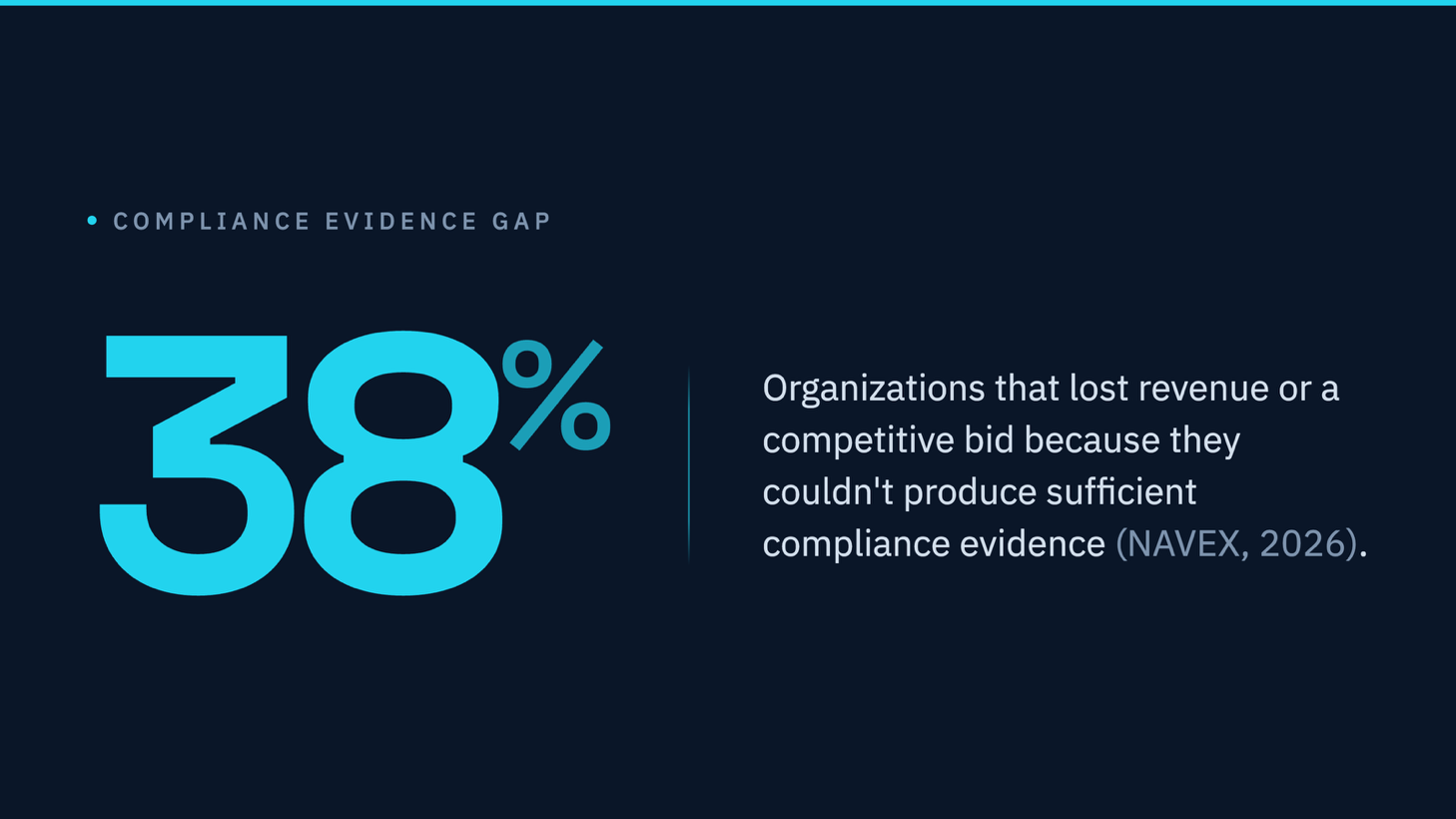
85% of executives say compliance requirements have become more complex, and 97% of organizations now run at least two formal audits a year.2 38% of organizations report losing revenue or a competitive bid because they couldn't produce sufficient compliance evidence when asked.2 A program built around a single annual audit is already behind the pace most organizations are operating at, and these five controls are exactly the ones that look fine on that annual cycle and fall apart between reviews.
What Continuous Compliance Looks Like
Effective compliance programs, tracing back to the framework the US Sentencing Guidelines popularized, are generally built around seven core elements.
- Policies and procedures: documented, current, and specific enough to be tested, not aspirational.
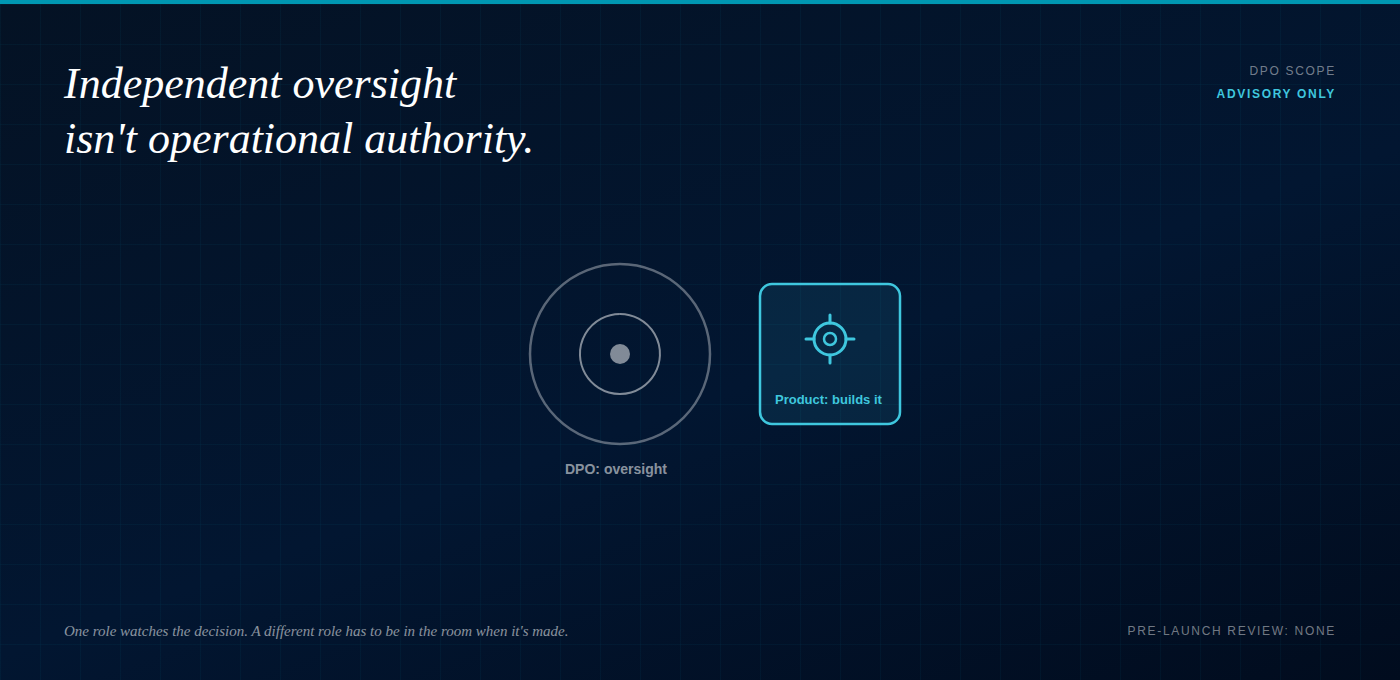
- Oversight and governance structure: a named accountable owner with a reporting line to leadership.
- Training and communication: measured for comprehension, not just completion.
- Monitoring and auditing: ongoing checks that a control is operating, not a point-in-time test.
- Reporting and internal controls: a mechanism for issues to surface before an external party finds them.
- Enforcement and corrective action: consistent follow-through when a control fails.
- Response and continuous improvement: fixing the root cause, not just the incident that exposed it.
Devensa AI's TruMaturity™ Assessment scores compliance maturity against these seven elements on the CMMI scale from Initial through Optimized, and continuously reassesses as frameworks and business operations change, so the weakest element surfaces before an external auditor finds it first. Devensa AI's vCCO vOfficer maps controls across every framework mapped to your organization, so evidence gets produced once and reused everywhere it's needed instead of rebuilt separately for each one.
Testing Controls the Way They'll Actually Be Tested
- Pair every completion-based control with an outcome-based test: a phishing simulation for training, a real restore for disaster recovery.
- Reopen vendor risk on a trigger: a renewal, a breach in their industry, a material change in their environment.
- Track engagement, not just acknowledgment: measure how long someone actually spends with a policy before confirming they read it.
- Keep evidence ready before it's requested: customers and auditors both expect proof on demand, not proof assembled after the ask.
- Treat the audit as a checkpoint, not the goal: a program built to pass and a program built to work aren't always the same program.
Frequently asked questions
What's the actual difference between passing an audit and being compliant?
Passing an audit means a control demonstrated the required behavior during the specific window an auditor was looking. Being compliant means that control operates that way continuously, not just during the test. A lot of controls pass audits and fail the rest of the year.
What is compliance management, specifically?
It's the ongoing program that identifies which laws, regulations, and standards apply to an organization, builds the controls to meet them, and continuously proves those controls are actually working, rather than proving it once a year at audit time.
Which compliance frameworks matter most for a growing company?
It depends on industry and customer base. SOC 2 and ISO 27001 are common baseline expectations for enterprise sales. HIPAA applies to healthcare data, PCI DSS to payment card data, and CMMC to Department of Defense contractors. Most companies of meaningful size map to more than one.
Can AI actually monitor compliance continuously?
Yes, for the tracking and evidence-gathering work. Devensa AI's vCCO vOfficer continuously monitors controls against mapped frameworks and surfaces gaps as they appear, with every finding routed through human review before anything is reported as resolved.
How do I know if my compliance program would hold up under real scrutiny?
Ask for evidence that a specific control is operating today, not a policy stating it should be. If producing that evidence takes more than a day, the program is built to pass an audit, not to actually work. Could your team produce that evidence right now?
Make Compliance Evidence Available, Not Assembled
Devensa AI's vCCO vOfficer continuously monitors controls against every framework mapped to your organization, scored on the CMMI scale from Initial through Optimized, so evidence is ready before it's requested.
If a customer asked for proof your controls are operating today, how quickly could you produce it?
Schedule a demo with our team at info@devensa.ai, or request early access to the Governance Readiness Assessment, coming to devensa.ai, if you'd rather start on your own.
Sources
- IBM Security, Cost of a Data Breach Report, cited via SanctionsLookup. https://sanctionslookup.com/learn/cost-of-non-compliance
- NAVEX, State of Risk and Compliance Report 2026, cited via Bright Defense. https://www.brightdefense.com/resources/compliance-statistics/